
What is B2B eCommerce: Complete Guide for Wholesalers in 2026
For owners and managers of wholesale distributors still taking orders over WhatsApp or spreadsheets. By the end you will know what to demand from a B2B platform and where to start without losing your sales team.
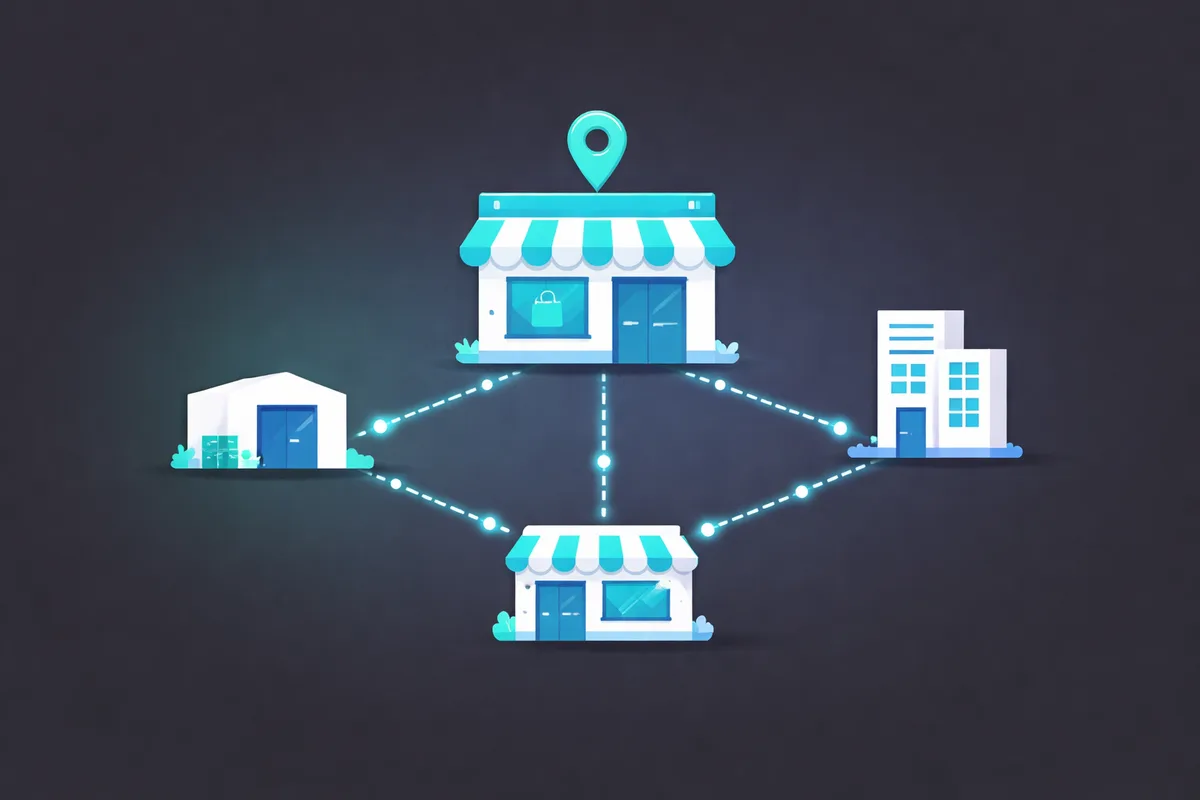
B2B eCommerce is the buying and selling of products or services between businesses through digital platforms. Although the concept sounds simple, the reality of electronic commerce between companies is much more complex than buying something from a conventional online store. In 2026, B2B eCommerce in Latin America is experiencing its greatest growth, and wholesalers who do not ride this wave risk being left behind.
In this comprehensive guide, we explain everything you need to know: what exactly B2B eCommerce is, how it differs from B2C, what types of platforms exist, what functionalities are essential in 2026, and how to get started without losing the business relationships you have built over years.

B2B vs B2C eCommerce: the differences that matter
If you have ever bought on Mercado Libre or Amazon, you already know B2C eCommerce. But B2B has completely different rules. These are the fundamental differences:
| Aspect | B2C eCommerce | B2B eCommerce |
|---|---|---|
| Pricing | Same for everyone | Different per client by volume, channel, location or agreement. A wholesaler may manage 10, 20 or even 50 price lists |
| Payment methods | Card or transfer at checkout | Credit sales (30, 60, 90 days): credit limits, current accounts and invoicing |
| Order volume | 1 or 2 units | By box, bundle or pallet: minimum units, packaging multiples and tiered quantity discounts |
| Catalog | Everyone sees the same products | Different per client: visible products, exclusive lines and own prices |
| Business relationship | Anonymous, transactional | Named client with history, negotiated terms and an assigned salesperson |
The platform must reflect and strengthen that business relationship, not replace it.
The state of B2B eCommerce in Latin America
Latin America has enormous potential in B2B eCommerce, but is still in an early adoption stage compared to markets like the United States or Europe. This represents both a challenge and an opportunity:
- It is estimated that less than 15% of wholesale transactions in the region are conducted through digital channels in 2026.
- Smartphone penetration exceeds 75% in most countries, meaning B2B buyers already have the tools to purchase digitally.
- WhatsApp is the dominant business communication channel in the region, and platforms that integrate with WhatsApp have significantly higher adoption rates.
- Local and regional ERPs (such as Contabilium, Dragonfish, Dux, or Virtual Seller) are increasingly prepared to integrate with eCommerce platforms.
Types of B2B eCommerce platforms
Adapted generic platforms
Solutions like Shopify, WooCommerce, or PrestaShop were designed for B2C. Some wholesalers try to adapt them with plugins and customizations, but quickly run into limitations.
They do not handle multiple price lists well, do not manage credit, do not easily integrate with local ERPs, and the purchasing experience does not reflect the complexity of B2B.
Custom development
Some companies choose to develop their own eCommerce platform. While this offers maximum flexibility, it requires a significant investment in time, money, and ongoing maintenance. A custom development can take 6 to 18 months and cost tens of thousands of dollars, plus the technical team needed to keep it updated.
Specialized B2B SaaS platforms
These are platforms specifically designed for business-to-business commerce, offered as a service (SaaS). VentasxMayor is an example of this category: a ready-to-use solution that includes all the functionalities a wholesaler needs, without custom development, with fast implementation and a predictable monthly cost. These platforms combine the best of both worlds: specialized functionalities with the speed and accessibility of the SaaS model.
Key B2B eCommerce functionalities in 2026
Not all functionalities carry the same weight. These are the ones that make the difference for a wholesaler in 2026:
- Multiple price lists: Automatically assign each client their price list, without manual intervention.
- Personalized catalogs: Show each client only the products that apply to them, with images, descriptions, and real-time availability.
- Quick orders and reordering: Allow clients to repeat previous orders with one click or load bulk orders by list.
- Credit management: Control credit limits, current accounts, and automatic blocks for overdue debt.
- ERP integration: Automatically synchronize stock, prices, orders, and clients with the internal management system.
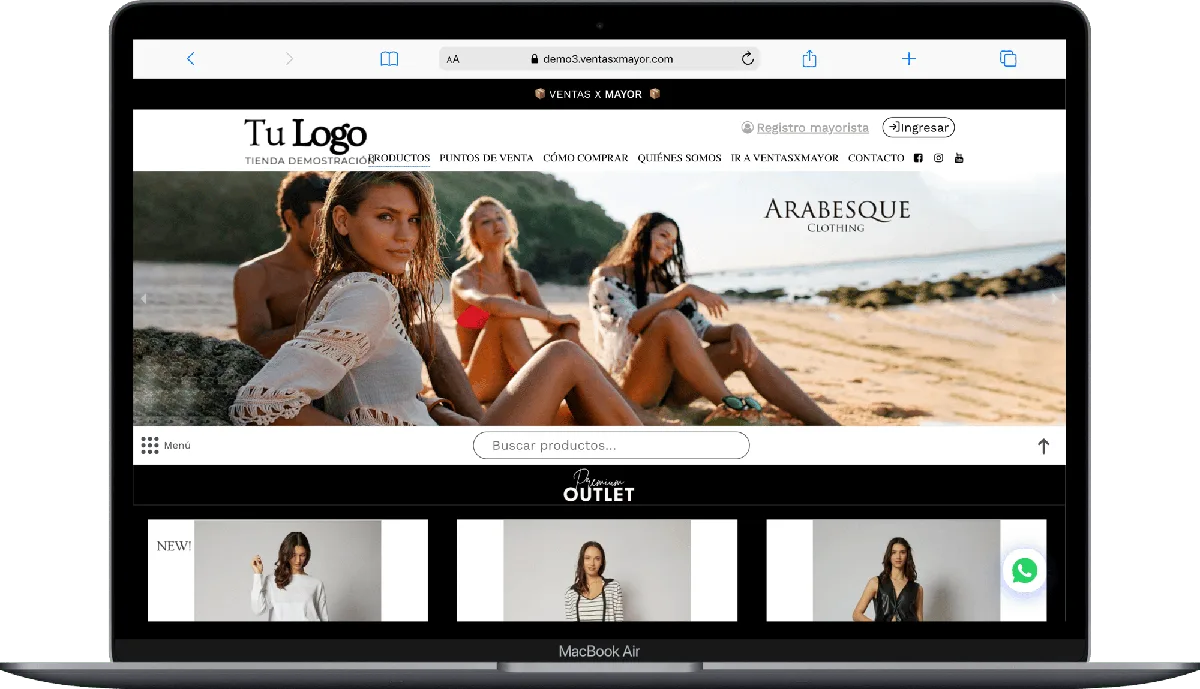
- Mobile-first: A purchasing experience optimized for mobile, because that is how B2B clients buy in Latin America.
- Integrated WhatsApp: Share catalogs, receive inquiries, and send order confirmations through the channel your clients already use.
- Analytics and reports: Data on sales, products, clients, and trends to make better commercial decisions.
.png "VentasxMayor B2B eCommerce optimized for mobile - mobile view")
High-impact sectors for B2B eCommerce
Although B2B eCommerce applies to virtually any industry, there are sectors where the impact of digitalization is particularly high:
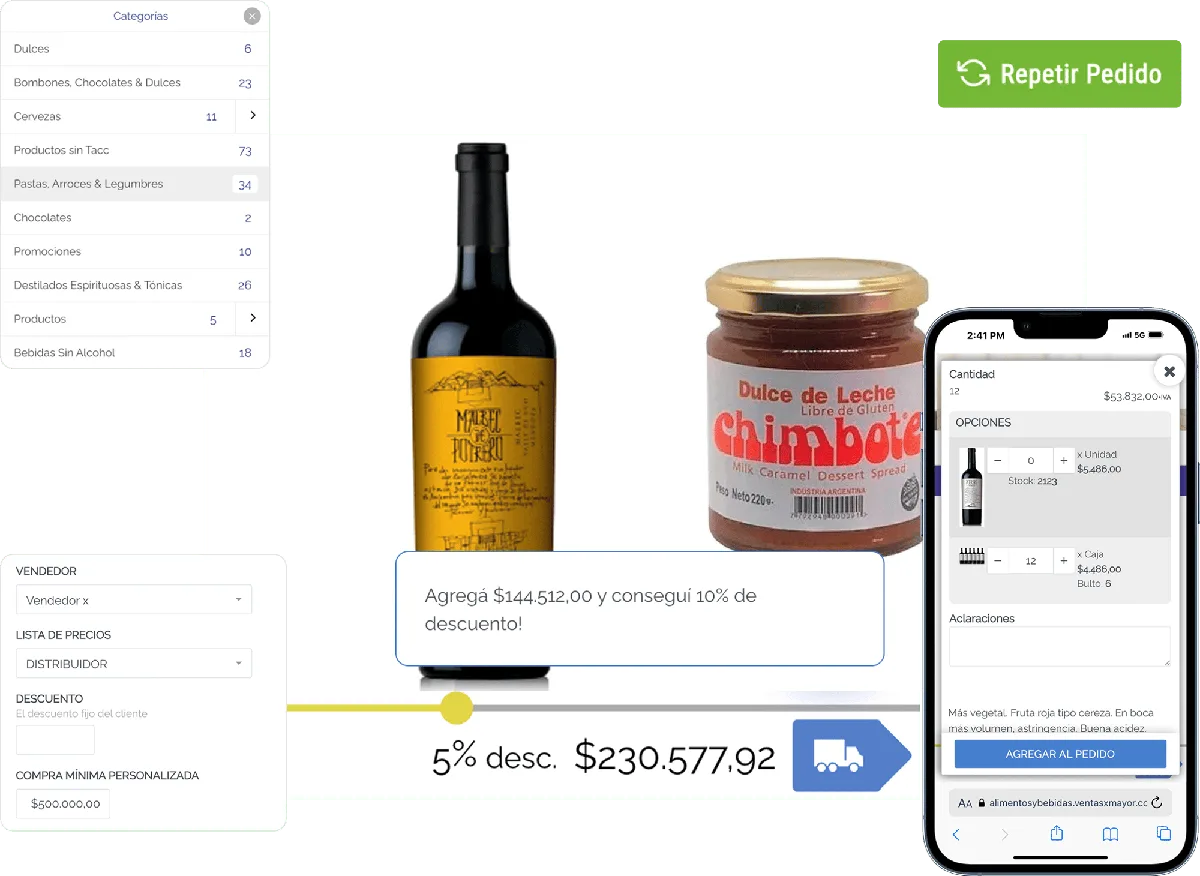
Food and beverages: Recurring orders, large catalogs, multiple channels (restaurants, stores, hotels). Digitalization enables automating order taking and reducing waste with better stock management.
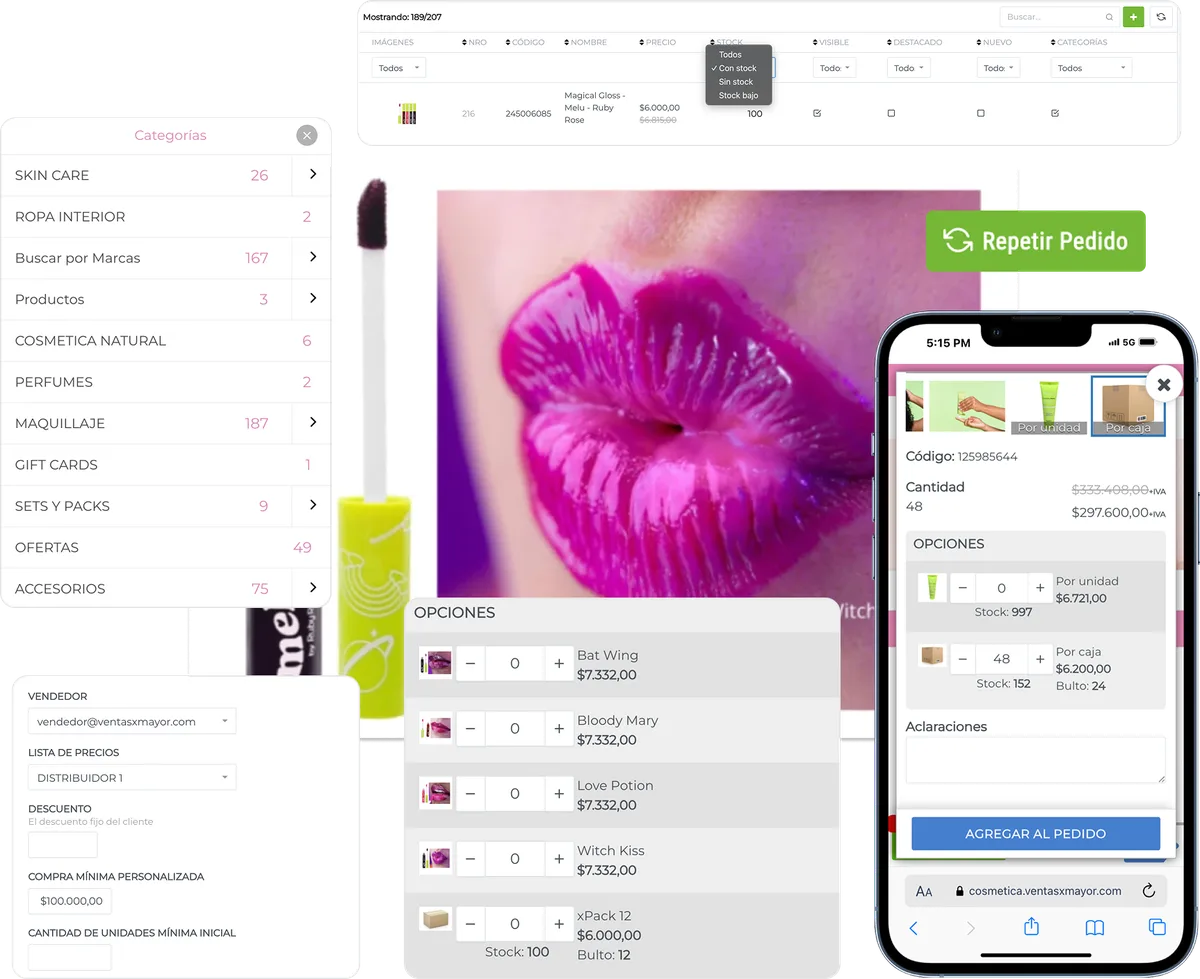
Cosmetics and perfumery: Catalogs with thousands of SKUs, complex volume discounts, and the need for high-quality images. eCommerce allows buyers to explore the full catalog without depending on a salesperson.
Hardware and construction: Thousands of products, prices that vary by project or contract, and buyers who need to quickly find specific parts. A good search engine and detailed product sheets make the difference.
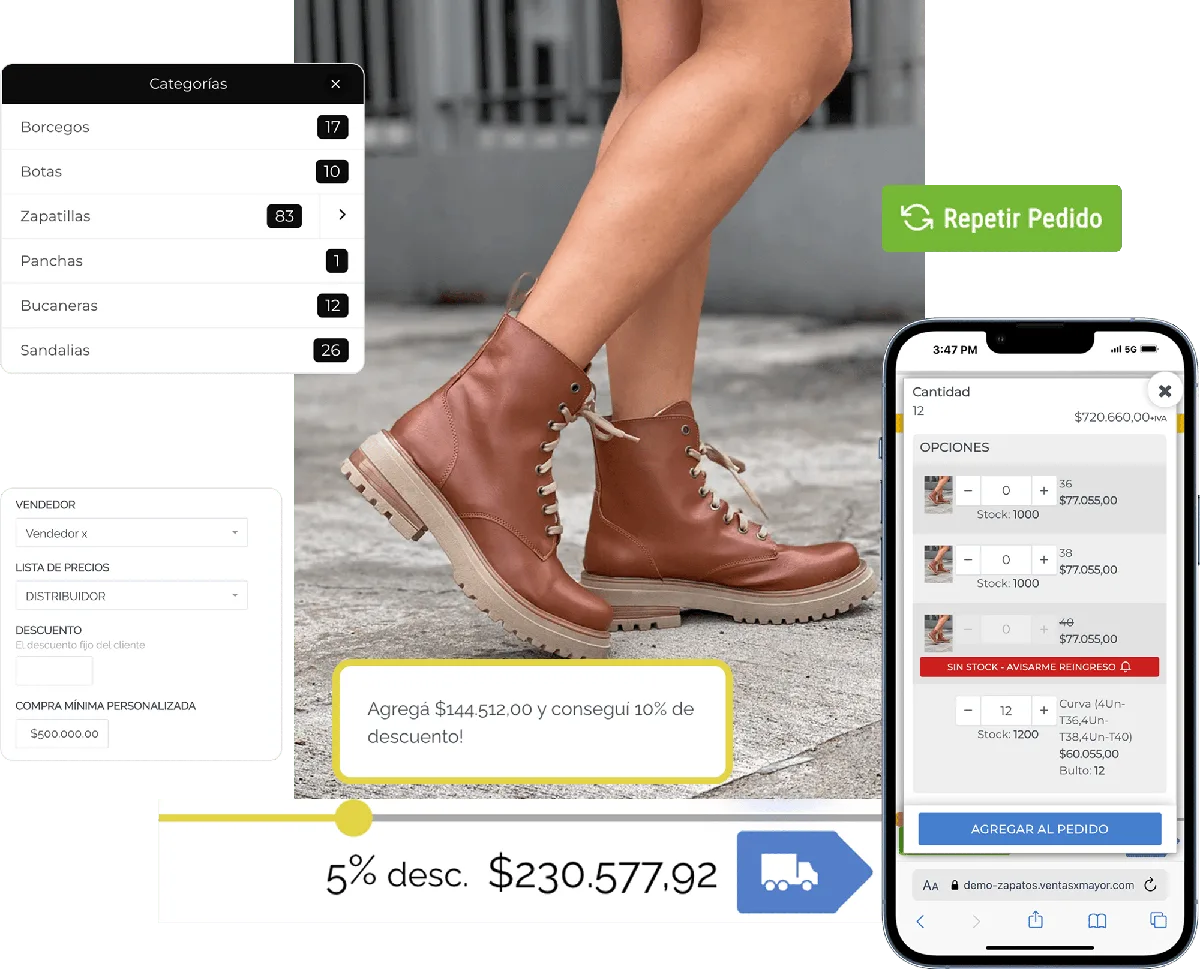
Apparel and footwear: Managing sizes, colors, seasons, and collections. B2B eCommerce allows retail stores to place their seasonal orders in a visual and organized way.
Technology and electronics: Constant catalog updates, detailed technical specifications, and buyers who research online before purchasing. A B2B eCommerce with complete technical sheets accelerates the purchasing process.
How to get started without losing business relationships
The biggest fear of many wholesalers is that digitalizing sales means losing the human touch that built their business. It is a legitimate fear, but unfounded if done right.
B2B eCommerce does not replace salespeople: it empowers them.
These are the steps for a successful transition:
- Start with replenishment orders: Routine orders (the same products, same quantities, every week) are perfect to digitalize first. Free the salesperson from repetitive tasks so they can focus on selling new products and handling complex inquiries.
- Involve your sales team: Salespeople must see the platform as their ally, not their competition. Show them how they can use portal data to sell better and how the platform saves them administrative time.
- Do not force adoption: Offer the digital channel as an additional option, not a mandatory replacement. Clients who try it and see the benefit will adopt it naturally. VentasxMayor's experience shows that once a client places their first digital order, 80% continue using it regularly.
- Keep personal communication: The salesperson remains the human point of contact. The difference is that now they have tools to be more efficient: they can see which clients did not buy this week, which products are declining in sales, and where opportunities lie.
Discover Autoseller™️: a tool that automates sales tracking and helps migrate clients to the digital channel without losing the human touch.

B2B eCommerce in 2026 is not a fad or a passing trend. It is the natural evolution of wholesale commerce, driven by buyers who are already accustomed to digital convenience in their personal lives and now demand it in their professional lives as well. Wholesalers who adopt this transformation now will have a competitive advantage that will be hard for latecomers to match.
Frequently asked questions
What is the difference between B2B and B2C eCommerce?+
In B2C the price is the same for everyone, payment is immediate, orders are a few units and the customer is anonymous. In B2B each client has its own price list, sales are on credit (30, 60, 90 days), orders are by box, bundle or pallet, and the client has a history, negotiated terms and an assigned salesperson.
Can Shopify or WooCommerce be used for wholesale?+
They were designed for B2C. They can be adapted with plugins, but they do not handle multiple price lists well, do not manage credit or current accounts and do not easily integrate with local ERPs. The alternatives are custom development (6 to 18 months and tens of thousands of dollars) or a specialized B2B SaaS platform.
Does B2B eCommerce replace salespeople?+
No: it empowers them. Routine replenishment orders are digitalized first, freeing the salesperson to sell new products, handle complex inquiries and use portal data to see which clients did not buy this week or which products are declining. The digital channel is offered as an additional option, not a mandatory replacement.
Next step
Per-customer pricing, credit accounts and bulk orders on a single B2B platform
VentasxMayor is a SaaS platform built for B2B: multiple price lists, per-customer catalogs, credit management and ERP and WhatsApp integration, ready to use without custom development.
B2B vs B2C online store: key differences and how to choose the right one
Pricing, catalogs, credit and buying process: the operational differences between B2B and B2C models and when to combine them.
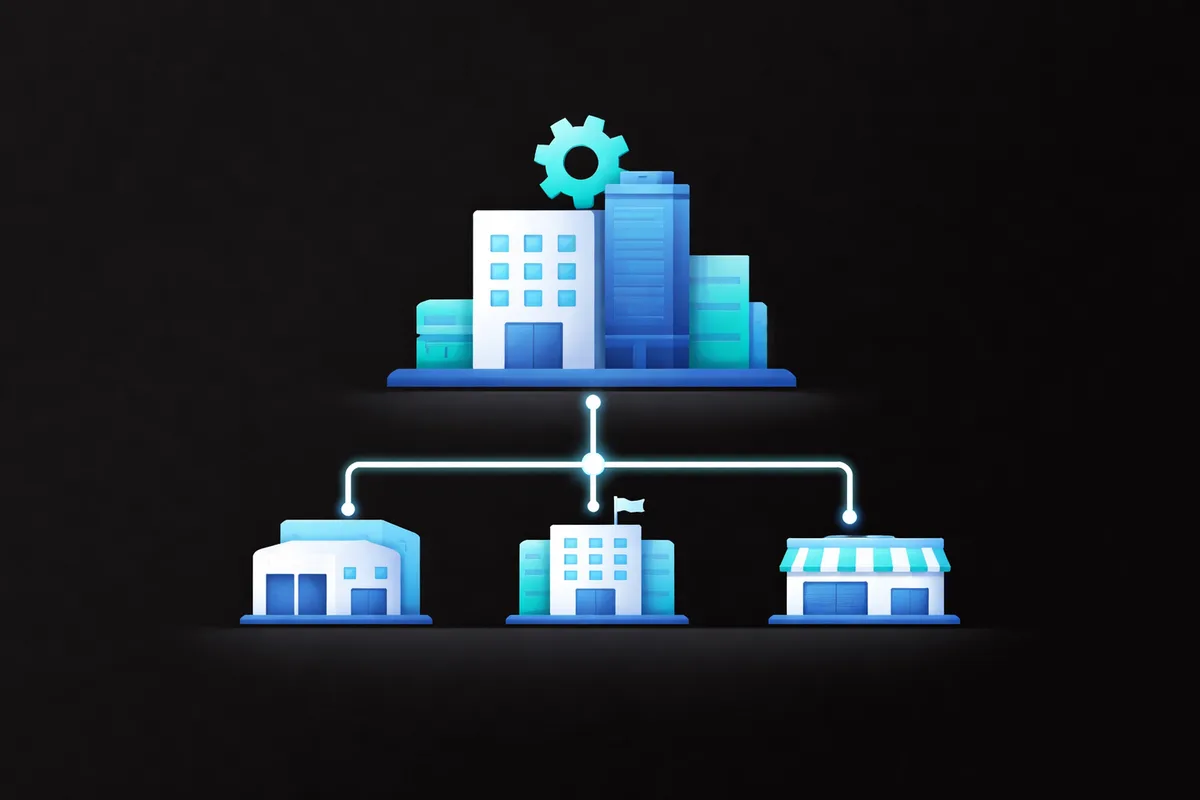
What is B2B? Meaning, how it works, types and examples
What B2B means, how it differs from B2C, the four types of business-to-business company, examples across Latin America and how B2B selling changed in 2026.
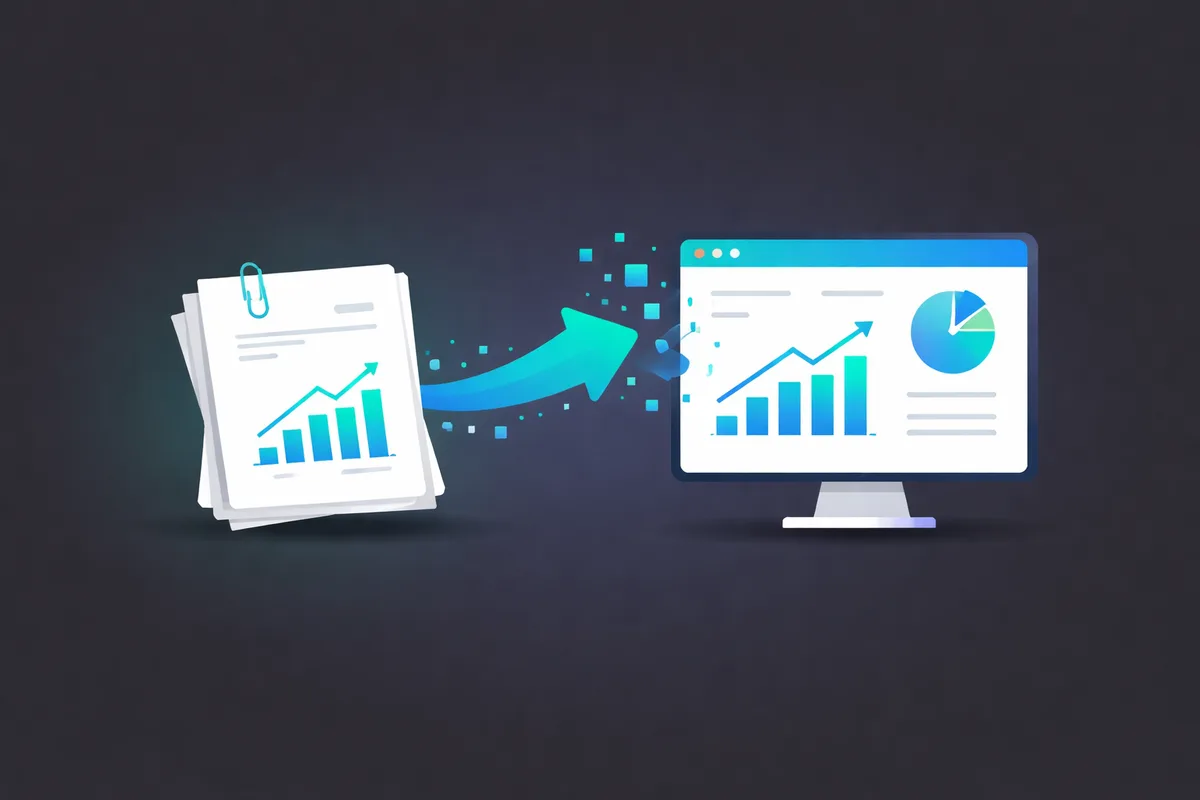
How to Digitalize Your Wholesale Business and Scale in 2026
Step-by-step guide to transform your wholesale business: from manual orders to a professional B2B platform with real results.