
Digital wholesale: how to digitize a wholesale business and bring your accounts online
For U.S. distributors and wholesalers still taking most orders by phone, text and email. What digital wholesale actually changes, the signs it is time, four steps, and a plan to move old-school accounts without losing them.

Digital wholesale means your accounts place their own orders, at their own price list, from a portal or an app, instead of calling, texting or emailing a rep who then types the order into the system. That is the whole definition. What makes it hard is not the software: it is that a distributor's orders live in six places at once. Voicemail, text threads, a rep's notebook, an inbox, a spreadsheet and the ERP.
This guide is for wholesalers and distributors in the U.S. who still take most orders by hand. We cover what actually changes when orders move online, the signs it is time, the four steps we see work, and how to bring along the accounts that swear they will never order from a screen.
What digital wholesale changes for a distributor
Most of what you find about digital wholesale is written for fashion brands selling to boutiques. A distributor with 300 accounts, four reps and a truck route has a different problem: the orders already exist, they are just expensive to capture. Here is what changes when they move online, in the order we see it happen:
- The catalog stops being a file. The PDF and the printed sheet become one live catalog with real stock. When a price changes, it changes once.
- Each account sees its own price list. The hardware store and the regional chain log in to the same store and see different prices, minimums and case packs, so nobody emails the wrong sheet to the wrong customer. How that works is in wholesale store prices per customer.
- Orders arrive typed by the customer, not by your staff. No re-keying, no "did he say 12 or 20". The rep stops being a keyboard and goes back to selling.
- The clock stops mattering. Across VentasxMayor stores, 41% of orders in the last twelve months came in outside business hours, Monday to Friday 9 to 6, local time (VentasxMayor, mostly Argentina-based customers, consulted October 19, 2026). Those are orders a phone line never takes.
- The reps keep their accounts. Every order stays tagged to its rep, whether the customer placed it alone at 9 p.m. or the rep loaded it from the car.
Take a fictional example we will use through this guide: Harbor Supply, a janitorial and packaging distributor in Tampa with 320 active accounts, three outside reps and about 1,100 SKUs. Say 60% of its orders come in by phone and text, 30% by email and 10% get written down during a visit. Every one of them is re-typed into the ERP by someone in the office. That re-typing, not the software, is what digital wholesale removes.
The buyers are already there. McKinsey's 2024 B2B Pulse survey of nearly 4,000 B2B decision makers found that at any stage of a purchase, a third want to deal in person, a third remotely and a third through digital self-serve, and that among sellers who offer e-commerce it has become the top revenue channel, with more than a third of revenue (McKinsey, September 2024). The same survey puts 44% of buyers in a group it calls "adapters": relationship-driven and slow to try new channels. That is the old-school customer this guide is about.

Signs your wholesale business needs to digitize its orders
Many wholesalers know they should digitalize their business, but are not sure when the right time is. These are the clearest signs that it is time to take the leap:
- Uncontrolled WhatsApp orders: your salespeople receive orders through text messages, voice notes, and photos. Products get lost, quantities get confused, and there is no centralized record of anything.
- Printed catalogs or outdated PDFs: every time you change a price or add a product, you have to reprint or manually resend files.
- Frequent order errors: wrong products, incorrect quantities, duplicate orders. The team spends hours correcting mistakes that could be avoided.
- Zero analytical visibility: you do not know which clients are buying less, which products have the highest demand, or where you are losing sales opportunities.
- Total dependence on salespeople: if a salesperson gets sick, goes on vacation, or resigns, their clients stop buying because nobody else knows their portfolio.
- You cannot sell outside business hours: if a client wants to place an order at 10 PM or on a Sunday, they have to wait until Monday.
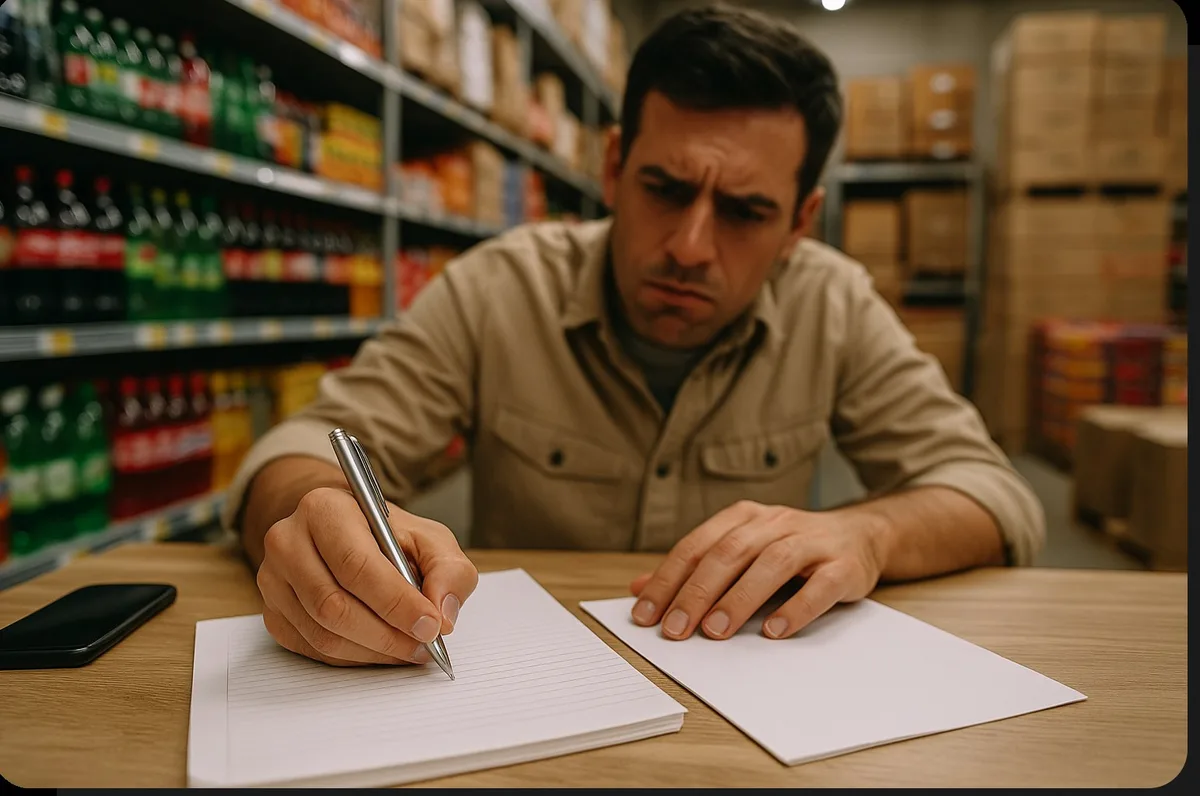
If you identified with two or more of these points, your business already needs to digitize its orders. The good news: you do not have to do it all at once, and the process is much simpler than it seems.
Step by step: from paper catalogs to professional B2B eCommerce
Digitalizing your wholesale business does not mean throwing away everything that works and starting from scratch. It is about incorporating digital tools that enhance what you already have. This is the path we recommend, based on the experience of hundreds of wholesalers who have already done it:
1. Digitalize your product catalog
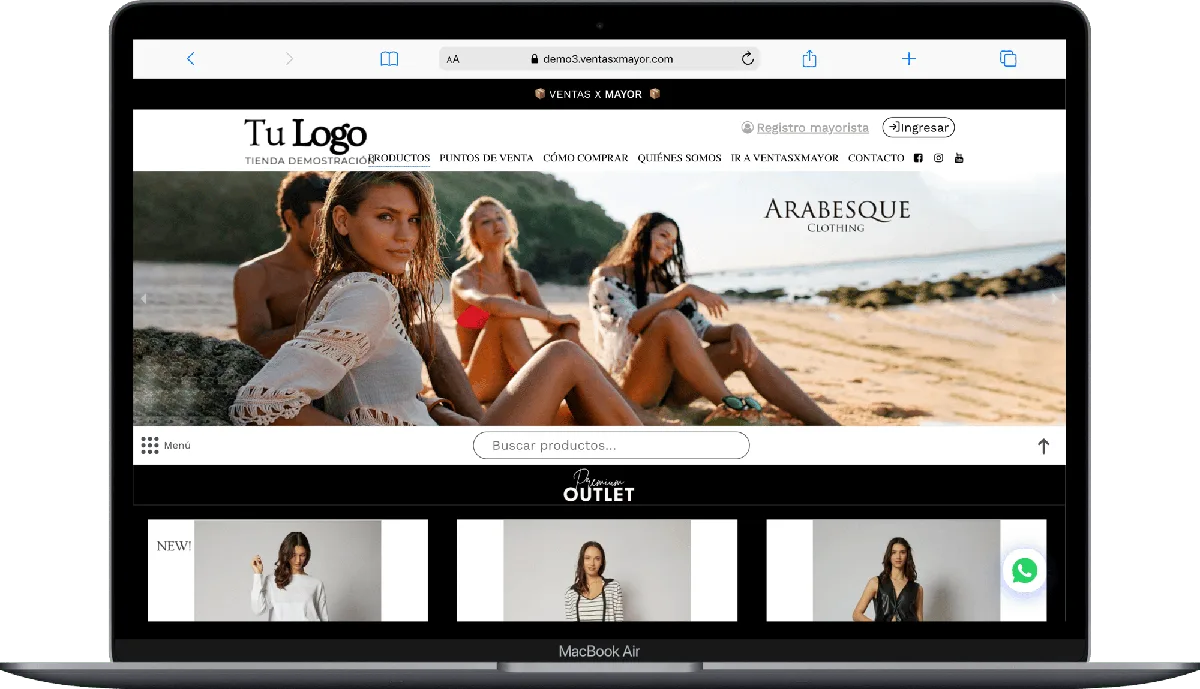
The first step is to have your complete catalog in digital format, with photos, descriptions, prices and updated stock. This replaces PDFs and printed catalogs, and ensures that each client always sees the most up-to-date information. With a platform like VentasxMayor, you can upload your catalog in minutes from a spreadsheet or sync it directly from your ERP.
2. Set up your price lists and commercial terms
Each client has their own price list, discounts, payment terms and available products. Set all of this up in the platform so that when a client logs in, they see exactly what applies to them. No generic prices: each client sees their real price, with their discounts and terms.
3. Enable the online ordering channel
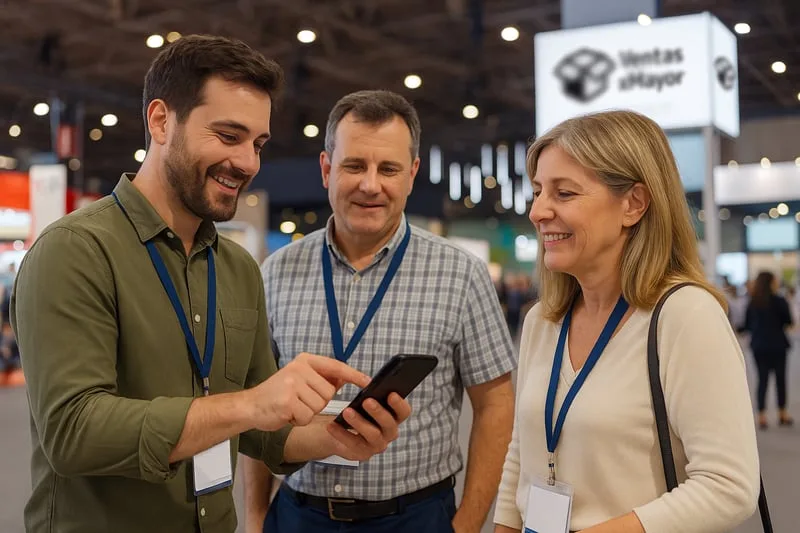
With the catalog and prices configured, you can now open your B2B online store. Your clients will be able to place orders from any device, at any time. They do not need to download any app: they access it from their phone or computer browser. The order arrives directly in your system, ready to be processed.
4. Connect your ERP or management system
ERP integration is what closes the loop. When an order comes in through the store, your ERP or accounting system reads it through the open API and pushes prices and stock back, so nobody types the same order twice and the catalog never shows a price the ERP already changed.
Key strategies for scaling your digitalized business
Once your B2B eCommerce is up and running, it is time to scale. These are the strategies that make the difference between a wholesaler who simply has an online store and one who truly grows thanks to digitalization:
Autoseller: automatic campaigns to the accounts you already have
Autoseller runs automatic campaigns to your existing accounts: reminders, promotions, abandoned carts and personalized emails, without a rep chasing each one. For a distributor the point is not the marketing. It is that the reorder nudge goes out while the rep is on the road, and the order comes back already typed.

Customer self-service: fewer inquiries, more sales
When your accounts can check their order history, see their own price list and repeat last month's order from the customer portal, they stop calling your office for that information. That frees your staff for the work that actually grows the business: opening accounts, selling the lines a customer does not buy yet, fixing problems.
Multichannel: sell where your clients are
Digitalization does not mean abandoning the channels that already work. It means integrating them. Your salespeople continue visiting clients, but now they can enter orders from the platform instead of writing them on paper. Your clients can buy through the web, WhatsApp, or phone, and everything arrives in the same centralized system. The key is that the client chooses how to buy, while you have complete visibility of everything.
How to migrate your clients without losing the business relationship
This is every wholesaler's biggest fear: "if I put everything online, am I going to lose my clients? Will they feel the relationship is no longer personal?" The answer is no, as long as you do the migration intelligently.
- Gradual adoption: do not force all your clients to use the platform at once. Start with the most tech-savvy, those who already send you orders via WhatsApp or email. They will adopt the tool quickly and will be your best testimony to convince the rest.
- Empower your salespeople: the salesperson does not disappear, they become empowered. Instead of writing orders on paper, they now enter them in the platform. Instead of re-typing orders, they load them from the car and see each account's history before the visit. The rep stops being an order taker and goes back to being a seller.
- Maintain human contact: the platform does not replace the salesperson, it complements them. Your clients continue talking to their usual salesperson, but now they can also place orders after hours, check their order history, and repeat previous orders with a click.
- Demonstrate value: when a client sees they can place an order in 2 minutes from their phone instead of calling and waiting, and repeat last month's order in two taps instead of reading it out loud, adoption becomes natural.
.png "Mobile view of the VentasxMayor platform: B2B orders from your phone")
What the numbers say about digital wholesale
We do not publish customer results we cannot back, so here is what the public numbers say, with dates:
- Total U.S. B2B sales are flat; the digital part is not. U.S. manufacturing and wholesale distribution sales reached $15.12 trillion in 2025, up 0.4%, while digital commerce "expanded at a double-digit pace" (Digital Commerce 360, January 26, 2026).
- E-commerce is now the top channel for the sellers who offer it. More than one-third of their revenue comes through it, and in-person revenue dropped five points year over year (McKinsey B2B Pulse, September 2024).
- The share keeps moving. Forrester's U.S. forecast put B2B e-commerce at 16% of total B2B sales in 2021 and projected 24% by 2027, about $3 trillion (Forrester, June 2022).
- Orders do not keep office hours. Across VentasxMayor stores, 41% of orders in the last twelve months came in outside Monday to Friday, 9 to 6, local time (VentasxMayor, mostly Argentina-based customers, consulted October 19, 2026).
What none of these numbers tell you is how fast your own accounts will move. In the fictional Harbor Supply example, a realistic first quarter is a third of the accounts ordering online, led by the ones that already email orders, and the rest still calling. That is fine. The office is already typing a third fewer orders.
How VentasxMayor fits a U.S. distributor
VentasxMayor is a B2B ecommerce platform built for wholesalers, distributors, manufacturers and importers, not an online store with a wholesale plug-in. For a distributor like Harbor Supply, what matters is in the box from day one:
- Price lists per account, with volume and tiered discounts
- Minimum orders and case-pack rules per product
- A wholesale ordering portal where each account logs in, sees its prices and stock, and reorders from history, 24/7
- Reps with their own book of accounts, and every order tagged to its rep
- Pro mode for orders with many lines
- Autoseller: automatic reminders and campaigns to your accounts
- Open REST API so your ERP or accounting system reads orders and pushes prices and stock
- Implementation included: we migrate your catalog, set up the store with your brand, connect your domain and payments
None of this is a six-month project. The plan only starts at launch, and support is on WhatsApp, in English.
Conclusion: the best time to digitalize is now
Digitalizing a wholesale business is not a question of "if" but "when."
And the answer is: sooner than your accounts will ask for it. Every order typed twice is a cost you pay every day; every call that comes in at 7 p.m. and goes to voicemail is an order you may not get. If most of yours still arrive by text, moving chat orders into a wholesale store is the first step.
It does not have to happen all at once. Start with the catalog, open ordering to the accounts that already email you, and move the rest when they see the first one get a confirmation in two minutes. The important thing is that the first step is a real order, not a plan.
Frequently asked questions
Where do I start digitalizing my wholesale business?+
With the catalog: having it complete in digital format, with photos, descriptions, prices and updated stock. Then you set up price lists and terms per client, enable the online ordering channel and, last, connect the ERP so stock, prices and invoicing sync on their own.
Do my clients need to install an app to place orders?+
No. They access it from their phone or computer browser, at any hour, and the order arrives directly in the system ready to process. Each client sees their own price list, discounts and terms.
Will I lose the personal relationship with my clients if I sell online?+
Not if the migration is gradual: start with the clients who already send you orders via WhatsApp or email, and let the rest adopt the tool once they see the value. The salesperson does not disappear: they keep visiting and serving clients, but enter orders in the platform and see each account's order history instead of writing on paper.
What is digital wholesale?+
Digital wholesale is selling to your business customers through an online channel they operate themselves: a B2B store or ordering portal where each account logs in, sees its own price list, minimums and stock, and places or repeats orders without a rep typing them. It covers the whole chain, from the live catalog to the order landing in your ERP. It is not a marketplace, and it does not replace reps: it removes the re-typing.
Will old-school customers really order online?+
Not all of them in month one, and that is normal. McKinsey's 2024 B2B Pulse survey classifies 44% of B2B buyers as relationship-driven "adapters" who are slow to try new channels. What works with them: the rep loads the order in the portal during the visit, so the account gets used to the confirmation email and the history before it ever logs in; then the rep shows them the reorder button. The rep keeps the account either way.
Sources
- U.S. B2B sales exceed $15 trillion in 2025 — Digital Commerce 360, January 26, 2026 (accessed October 26, 2026)
- Five fundamental truths: how B2B winners keep growing (B2B Pulse 2024) — McKinsey, September 12, 2024 (accessed October 26, 2026)
- US B2B e-commerce will reach an estimated $3 trillion by 2027 — Forrester, June 8, 2022 (accessed October 26, 2026)
Next step
Upload your catalog and start taking orders online
With VentasxMayor you load the catalog from a spreadsheet or your ERP, set up per-client price lists, and your clients order from their phone at any hour, with nothing to install.

What is B2B eCommerce: Complete Guide for Wholesalers in 2026
Definition, differences from B2C, platform types, key features and high-impact sectors in Latin America.
B2B customer portal: what it is, what it needs and how to roll it out
What a B2B customer portal is, what it needs for a wholesaler, how it differs from a rep portal and an online store, and how to launch it in five steps.
Wholesale orders on WhatsApp: the complete WhatsApp Business guide to automated messages
Set up automated messages, quick replies and connect WhatsApp with your B2B platform: the portal takes the order, WhatsApp notifies.