
Wholesalers: How to Import and Export from Argentina — What Nobody Tells You
For wholesalers and distributors weighing up their first container. Which registrations, documents and professionals you need, how to work out the real cost of an imported product, and the five mistakes that eat the most margin.
Why wholesalers should consider importing and exporting
International trade is no longer exclusive to large corporations. In 2025, more and more wholesalers in Latin America are discovering that importing and exporting is not only possible but can be the key to multiplying their margins and diversifying their business. Whether you are looking for more competitively priced products, want to access markets that pay better, or simply need to differentiate yourself from local competition, foreign trade offers concrete opportunities.
However, the path is full of traps that few people mention. Hidden costs, bureaucratic delays, exchange rates that move against you, and regulations that change from one day to the next. In this article, based on a video from the VentasxMayor channel, we tell you what you really need to know before taking the leap.
Import basics for wholesalers in Latin America
Importing products for wholesale resale involves much more than finding a supplier in China or Europe and placing an order. There is a complete ecosystem of regulations, documentation, and costs that you need to understand before committing your capital.
Importer registration: In Argentina, you need to be registered in AFIP's Importer and Exporter Registry. Other countries in the region have similar registries with their customs authority. This procedure is the first step, and without it, you cannot operate legally.
Tariff classification (NCM): Every product has a tariff code that determines import taxes, restrictions, and specific requirements. Misclassifying a product can mean paying higher tariffs than necessary or, even worse, having your goods held at customs.
Key documentation: Commercial invoice, packing list, bill of lading or airway bill, certificate of origin, and depending on the product, sanitary certifications, electrical safety certificates, or technical standards certifications. Every missing document means one more day of delay and additional port storage costs.
Working with a reliable customs broker is essential. The broker not only manages the clearance of goods but also advises you on current regulations, which change frequently in the region. A good customs broker saves you more money than they charge.
Incoterms: These are international rules that define who pays for what in a foreign trade operation. The most common for wholesalers are FOB (Free on Board, where you handle the international freight) and CIF (Cost, Insurance and Freight, where the supplier includes freight and insurance). Choosing the wrong Incoterm can cost you thousands of dollars.
How to start exporting wholesale products
Exporting is the other side of the coin, and for many Latin American wholesalers, it can be even more profitable than importing. Products like food, apparel, cosmetics, construction materials, and manufactured goods have growing international demand.
Finding international buyers
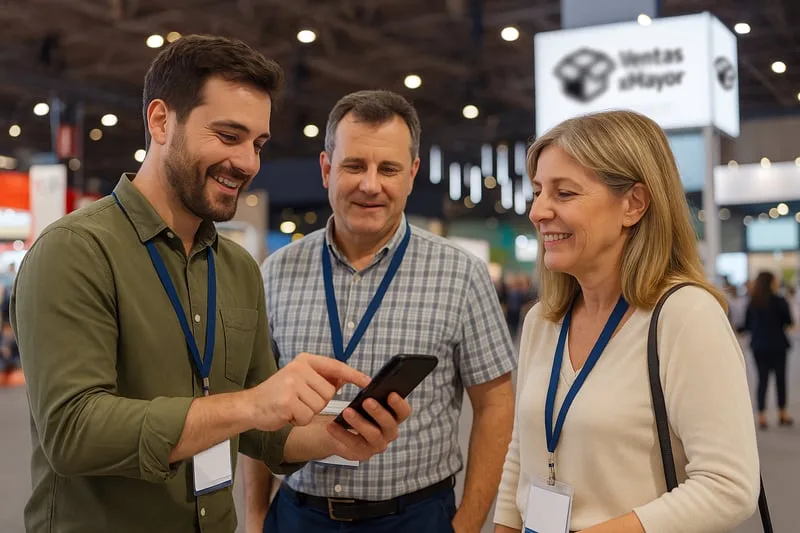
Trade fairs (such as Expocomer in Panama, FISA in Chile, or APAS in Brazil) remain a key source of contacts. But in 2025, digital B2B platforms have become the most efficient channel for connecting with buyers from other countries. Having your catalog online, with prices in multiple currencies and descriptions in multiple languages, opens doors that previously required months of travel and meetings.
Export logistics
International shipping requires planning. You need to decide which route to ship by, and each modality has different timelines, costs, and documentation.
| Route | Cost | Speed | Ideal for |
|---|---|---|---|
| Sea | Most economical | Slowest | Large volumes |
| Air | Expensive | Fast | Samples and high-value products |
| Land | In between | In between | Intraregional trade (Argentina-Chile, Argentina-Brazil) |
International payment collection
Collecting from clients in other countries has its complexities. International bank transfers (SWIFT) are the most common method but have high fees and take days. Letters of credit offer security but add bureaucracy. B2B payment platforms and offshore dollar accounts are increasingly popular alternatives among wholesalers who export regularly.
Common mistakes and what nobody tells you
Foreign trade is full of lessons that can only be learned by making mistakes, or by listening to those who already made them. These are the most common among wholesalers who start operating internationally.
Underestimating total costs
The FOB price of the product is just the tip of the iceberg. International freight, insurance, import tariffs, statistics fee, additional VAT, port terminal charges, customs broker fees, inland freight from the port to your warehouse... If you do not calculate this correctly before importing, you could end up selling at a loss.
Rule of thumb: the landed cost of an imported product is usually between 1.5x and 2.5x its FOB price.
Not considering exchange rates
In countries with high exchange rate volatility like Argentina, the exchange rate can move significantly between the moment you close the purchase and when the goods arrive (45 to 90 days later). Many wholesalers have seen their margin evaporate by not hedging this risk. Strategies such as buying dollars in advance, negotiating prices in local currency with the supplier, or using foreign exchange hedging instruments are essential.
Ignoring bureaucratic delays
A container can be held at customs for weeks if a single document is missing or if the corresponding regulatory body (ANMAT for food and cosmetics, INTI for industrial products, etc.) has not issued authorization in time. Every day of port storage costs money. Planning months in advance is not a luxury; it is a necessity.
Not verifying the supplier
Especially when importing from Asia, supplier verification is critical. Requesting samples before placing a large order, asking for references from other buyers, verifying factory certifications, and if the volume justifies it, hiring a pre-shipment inspection are steps that protect your investment. A defective batch not only means lost money but also lost customers.
Trying to do everything alone
Foreign trade is teamwork. You need a good customs broker, a reliable freight forwarder, an accountant who understands foreign trade, and ideally, a specialized lawyer for your first international contracts. Trying to save on these professionals usually ends up costing more.
How a digital B2B channel makes international operations easier
This is where technology makes a real difference. A wholesaler operating internationally needs tools that go beyond a simple online catalog. They need a platform designed for the complexity of international B2B trade.
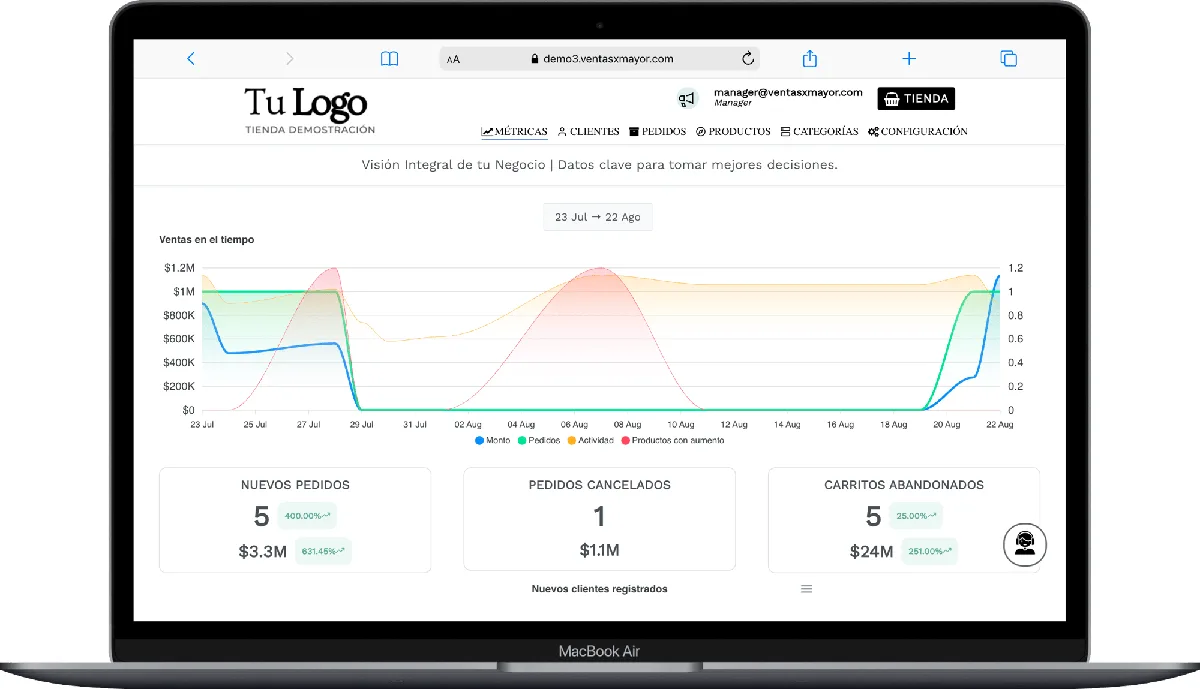
Shared catalogs with market-specific pricing: With VentasxMayor, you can create differentiated price lists for each country or client group. Your buyer in Chile sees prices in Chilean pesos, the one in Colombia in Colombian pesos, and the one in the United States in dollars. All from a single catalog that you manage centrally.
Automatic multi-language: Your B2B store is displayed in the buyer's language. No need to maintain multiple websites or manually translate each product page. This eliminates one of the biggest barriers to selling to clients from Brazil, the United States, or other markets.
24/7 orders from any time zone: When your buyer in Mexico wants to place an order at 10pm their local time (midnight in Argentina), they do not need to wait for your office to open. The platform is available 24 hours a day, 7 days a week, receiving orders while you sleep.
ERP integration and stock management: International operations add complexity to inventory control. You need to know in real time what stock is available for export, what is committed to the local market, and what is in transit from abroad. VentasxMayor integrates with major ERPs to keep everything synchronized.
Digital documentation: Proforma invoices, customs price lists, certificates, and commercial documentation can be generated and shared digitally from the platform. This reduces errors, speeds up clearance times, and gives you an organized record of all your operations.
Checklist before your first container
What separates wholesalers who succeed in foreign trade from those who fail is not the size of their company or their initial capital, but their level of preparation and the tools they use. Before committing capital, run through this list.
- Registered in AFIP's Importer and Exporter Registry or its local equivalent.
- Tariff classification (NCM) verified for every product.
- Customs broker and freight forwarder chosen, plus an accountant who understands foreign trade.
- Incoterm agreed with the supplier (FOB or CIF) and clarity on who pays freight and insurance.
- Landed cost calculated with every expense, not just the FOB price.
- Exchange rate risk hedged for the 45 to 90 days the goods take to arrive.
- Supplier samples, references and certifications reviewed before the large order.
- Regulatory authorizations (ANMAT, INTI, etc.) started months in advance.
- Online catalog with market-specific prices in the buyer's language.
Get well informed, surround your business with reliable professionals, use technology that simplifies complexity, and start small. A successful first container can be the beginning of a business line that transforms your company.
Frequently asked questions
What do I need to start importing as a wholesaler in Argentina?+
First, registration in AFIP's Importer and Exporter Registry: without it you cannot operate legally. Then the correct tariff classification (NCM) for each product, the basic paperwork (commercial invoice, packing list, bill of lading, certificate of origin and any certifications the product requires) and a reliable customs broker to handle clearance and advise you on current regulations.
How much does an imported product really cost beyond the FOB price?+
On top of the FOB price you have to add international freight, insurance, import tariffs, the statistics fee, additional VAT, port terminal charges, customs broker fees and inland freight from the port to your warehouse. The rule of thumb is that the landed cost ends up between 1.5x and 2.5x the FOB price. If that calculation is not done before importing, you can end up selling at a loss.
How do I collect payment for an export from a client in another country?+
An international bank transfer (SWIFT) is the most common method, but it carries high fees and takes days. Letters of credit provide security in exchange for more bureaucracy. Among wholesalers who export regularly, B2B payment platforms and offshore dollar accounts are increasingly popular. It is also worth hedging exchange rate risk, since 45 to 90 days can pass between closing the deal and the goods arriving.
Next step
Sell to buyers in other countries from a single catalog
VentasxMayor shows each client their own price list in their currency, displays the store in the buyer's language and takes orders around the clock from any time zone.
How to Digitalize Your Wholesale Business and Scale in 2026
Step-by-step guide to transform your wholesale business: from manual orders to a professional B2B platform with real results.
B2B Customer Portal: What It Is, Benefits and How to Implement It
24/7 orders, personalized pricing, credit management and error reduction: everything a B2B portal solves for your operation.
What is B2B eCommerce: Complete Guide for Wholesalers in 2026
Definition, differences from B2C, platform types, key features and high-impact sectors in Latin America.