
What markup is: formula, difference from margin and how to use it to set wholesale prices
For whoever adds "30%" to the goods and believes they earn 30%, and for whoever has to explain to a rep why a 20% discount ate almost all the profit. Markup and margin measure the same thing from different ends, which is why they give different numbers. Here is the formula, the table to convert one into the other and how it chains from factory to counter.
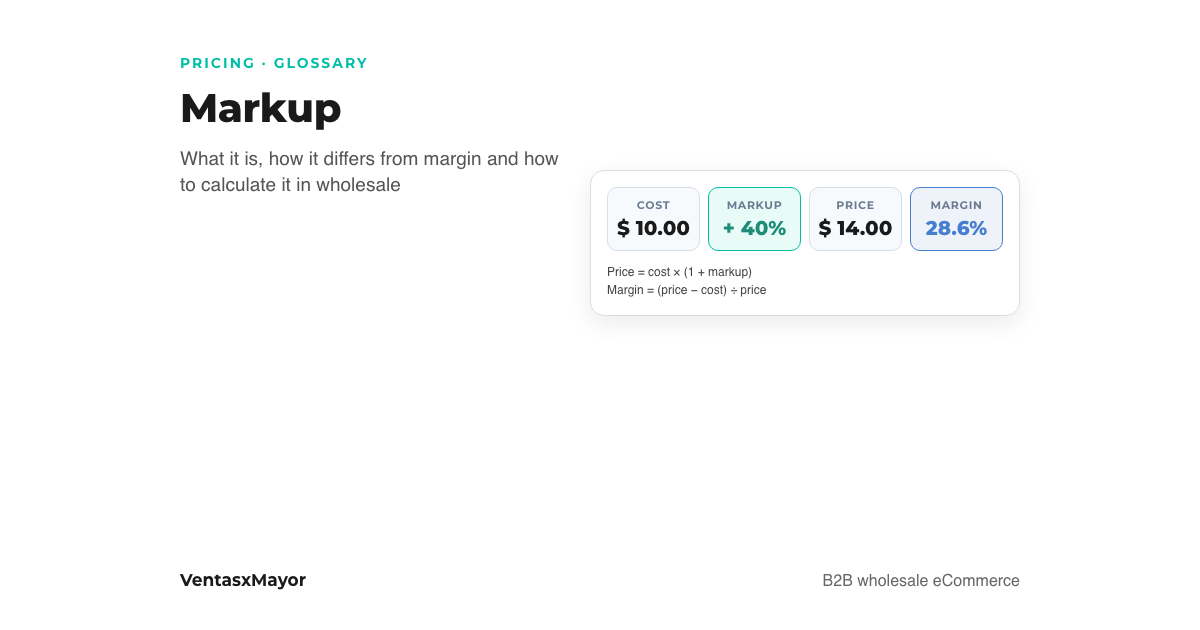
Markup is the percentage added to a product's cost to reach its selling price. If an item costs $10 and sells for $14, the markup is 40%. Margin, instead, is the share of the selling price that remains as profit: on that same item, $4 out of $14 is 28.6%. They are two ways of looking at the same $4, one from cost and one from price.
The problem is that they are used as synonyms. A wholesaler that "works at 30%" markup has a 23% margin; if it also gives a 20% discount on the price, it keeps 3.7%. This article sets out both formulas, the table to convert one into the other and how markup is used to set prices at each step of the chain.
The two formulas
| What | Formula | Example (cost $10, price $14) |
|---|---|---|
| Price from markup | Price = cost × (1 + markup) | 10 × 1.40 = $14 |
| Markup from price | Markup = (price − cost) ÷ cost | 4 ÷ 10 = 40% |
| Margin | Margin = (price − cost) ÷ price | 4 ÷ 14 = 28.6% |
| Price from margin | Price = cost ÷ (1 − margin) | 10 ÷ 0.714 = $14 |
| Markup to margin | Margin = markup ÷ (1 + markup) | 0.40 ÷ 1.40 = 28.6% |
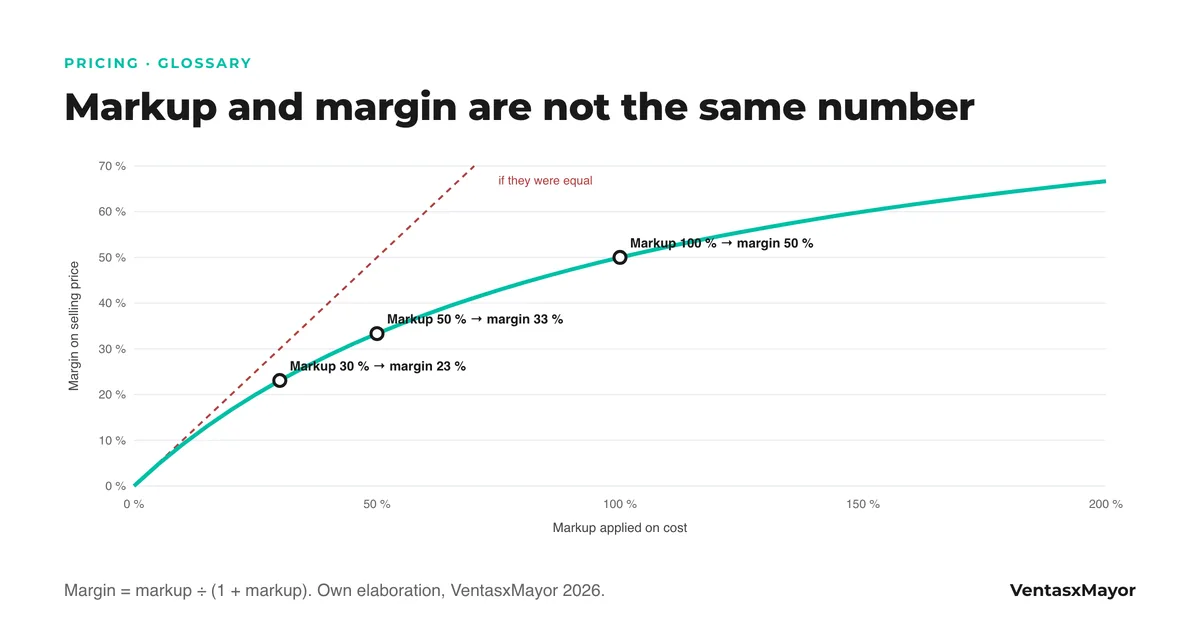
Equivalence table
| Markup on cost | Margin on price | For a margin of… | …the markup must be |
|---|---|---|---|
| 10% | 9.1% | 10% | 11.1% |
| 20% | 16.7% | 20% | 25% |
| 30% | 23.1% | 30% | 42.9% |
| 40% | 28.6% | 40% | 66.7% |
| 50% | 33.3% | 50% | 100% |
| 100% | 50% | 60% | 150% |
Discounts apply to the price, so they compare against margin, not markup. With a 30% markup (23% margin), a 20% discount leaves a 3.7% margin; a 25% discount leaves a loss. Before authorizing a discount, look at the margin that remains, not the percentage given away.
How it chains: factory, wholesaler, retailer
Each step of the chain applies its own markup on the price it paid. A product leaving the factory at $10 with a 30% wholesale markup sells to the retailer at $13; the retailer applies an 80% retail markup and displays it at $23.40. Retail markup is usually much higher than wholesale markup because the store sells one unit at a time and pays for the premises; the wholesaler sells by the case and earns on turnover. That is why the wholesale price is not "the retail price with a discount": it is a different calculation, from cost. How to set each customer's tier is in different prices per customer.
How VentasxMayor solves it
- Free calculator. The wholesale price and margin calculator goes from cost to price with the right margin, shows the equivalent markup and builds quantity prices that never drop below the minimum margin.
- Price lists per customer. Each list has its tier: distributors, stores, first order. The customer sees theirs and the rep enters the order with that same list.
- Volume discounts defined in advance. They are set in the discount engine and apply on their own in the cart, with the margin already calculated, instead of being negotiated order by order.
Frequently asked questions
Are markup and margin the same thing?+
What markup suits a wholesaler?+
Does markup include tax?+
How do I get the selling price from the margin I want?+
Sources
Next step
Prices per list, with the margin in view
In VentasxMayor each price list is built from cost with its own markup, volume discounts apply on their own in the cart and the rep enters the order with that customer's list. To run the numbers first, the wholesale price and margin calculator is free.
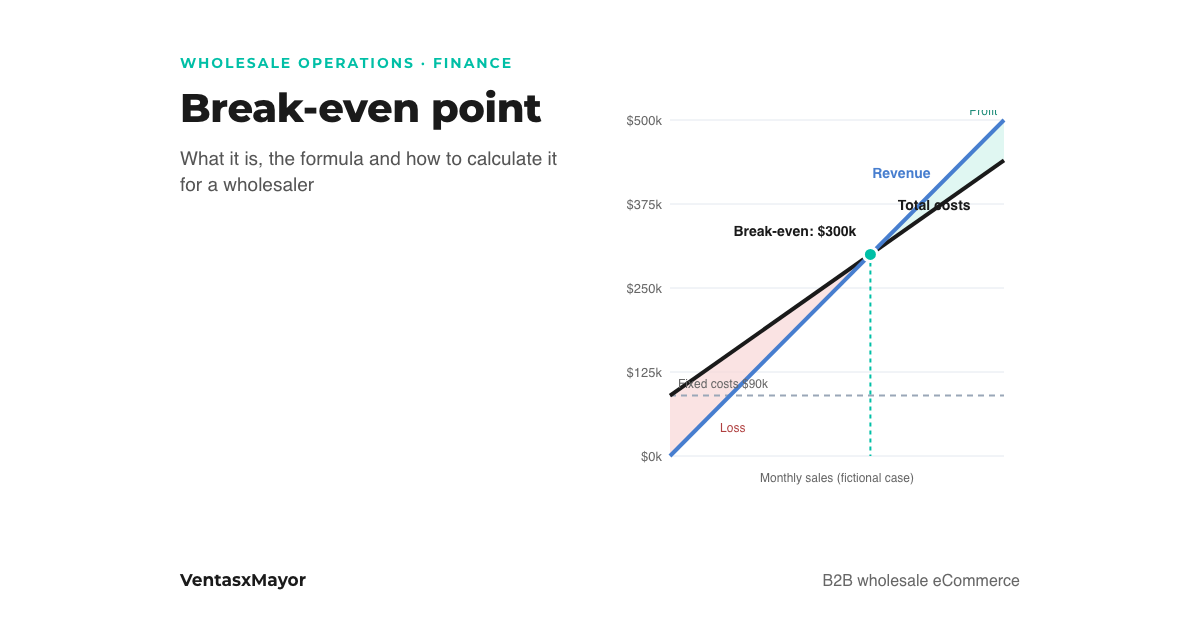
Break-even point: what it is, the formula and how to calculate it for a wholesaler
How much you need to sell each month to stop losing money: formula in units and dollars, a step-by-step distributor case and what moves it.
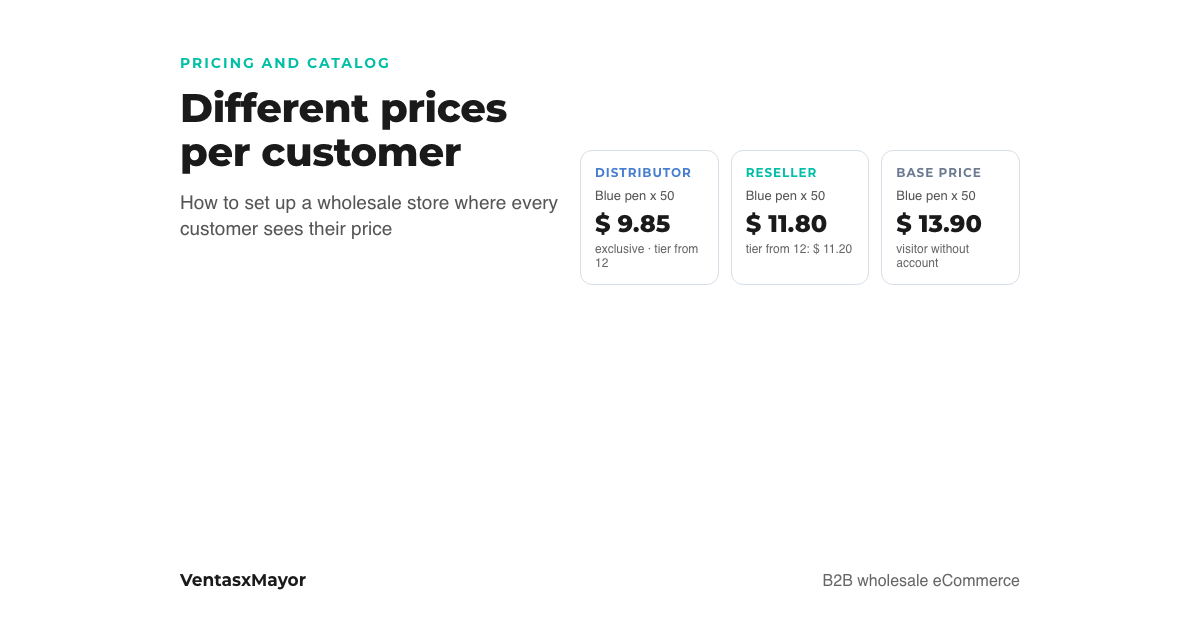
How to set up a wholesale online store with different prices per customer
Price lists by buyer type, per-customer discounts and volume tiers: how they combine, how to set up the store step by step and what a visitor without an account sees.
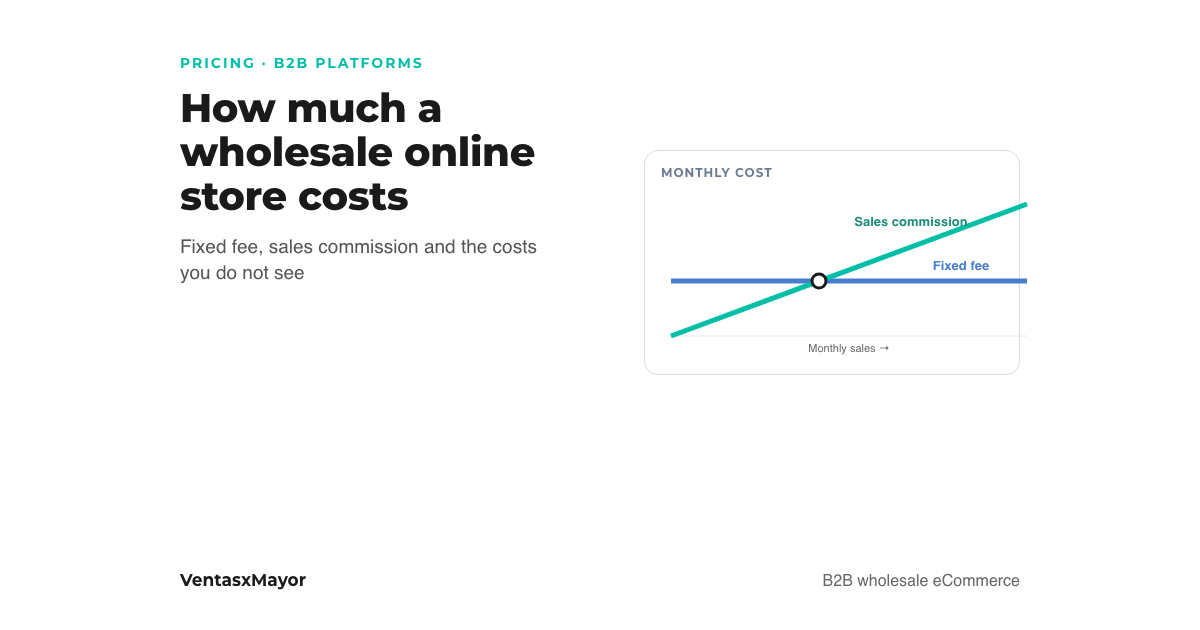
How much does a wholesale online store cost? Fixed fee, sales commission and the costs you do not see
VentasxMayor's price, the six costs to compare across platforms and a fixed-fee vs sales-commission calculator.